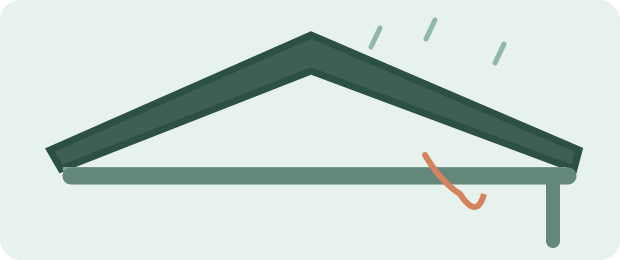
A roof that leaks only in heavy rain can be baffling. The ceiling may stay dry for weeks, then suddenly show a brown patch after one rough evening. The pattern matters: stronger wind, larger volumes of water and overflowing drainage can expose weaknesses that ordinary showers never reveal.
If a leak appears only in wind-driven rain, write down the wind direction. The weather pattern can help a roofer choose where to inspect first.
Heavy rain changes how water travels
Under normal conditions, rain should run down the roof covering into the gutter. During an intense downpour, water can accumulate faster than it drains, while gusts can push it sideways or underneath imperfect junctions. A leak that appears only in certain wind directions is a clue worth mentioning to a roofer.
Another common reason is delay. Water can enter higher up the roof, follow a timber or underlay and only become visible at a ceiling joint some distance away. The indoor stain is not necessarily directly below the fault.
Six places a roofer may investigate
- Flashing around chimneys and walls. These are transitions between two materials. Small gaps can show up when rain is driven sideways.
- Roof valleys. Where two slopes meet, water is concentrated into a narrower channel. Debris or damaged lining can matter more during heavy rain.
- Slipped or cracked tiles and slates. One displaced piece may let wind-driven rain reach what is normally protected.
- Gutters and downpipes. Overflow can wet walls and roof edges, sometimes creating stains that look like a roof leak.
- Flat-roof outlets. Blocked drainage can leave standing water at vulnerable seams or upstands.
- Roof windows, vents and penetrations. Their seals and flashing need to work together with the surrounding roof.
What you can notice without climbing
From safely inside, note the time water appeared, whether the rain was accompanied by strong wind and which room was affected. Photograph the stain and, if possible, take another picture the next day to see whether it has spread. From ground level, you might be able to see a visibly displaced tile or overflowing gutter. Avoid climbing ladders or entering an unsafe loft to investigate.
What to tell the roofer
“The leak appears after heavy rain, particularly when the wind comes from the west. The water mark is on the upstairs landing near the chimney. We have not seen dripping during light showers.” Details like these help the roofer decide where to inspect first, although they do not replace a proper assessment.
Can it wait until the weather improves?
If water is entering, arrange an assessment promptly rather than assuming the roof has repaired itself when the rain stops. A dangerously bulging ceiling, water near wiring or a risk of collapse needs immediate attention: keep people away and contact appropriate emergency help if there is immediate danger. A roofer should use safe access methods and may need to postpone work during severe weather.
Need a roofer to take a look?
Describe the problem in your own words and request quotations using a MyJobQuote form. Your contact details go directly to MyJobQuote.
Explore repair quotes ↗Common questions
Why does my roof leak only when the wind blows?
Wind can drive rain sideways into weak junctions and under displaced coverings. The wind direction is useful information, but it does not identify the exact leak source.
Is the stain always below the leak?
No. Water can track along rafters, underlay or ceilings before showing indoors.
This article offers general explanations, not a remote roof inspection or a guarantee about the cause of a leak.